Sanders & technique · 1 min read
Which sander for which job?
Random orbital, orbital, belt sander, angle grinder or by hand after all – what each machine does well and what it is not meant for.
Last updated: · published

Random orbital sander: the all-rounder
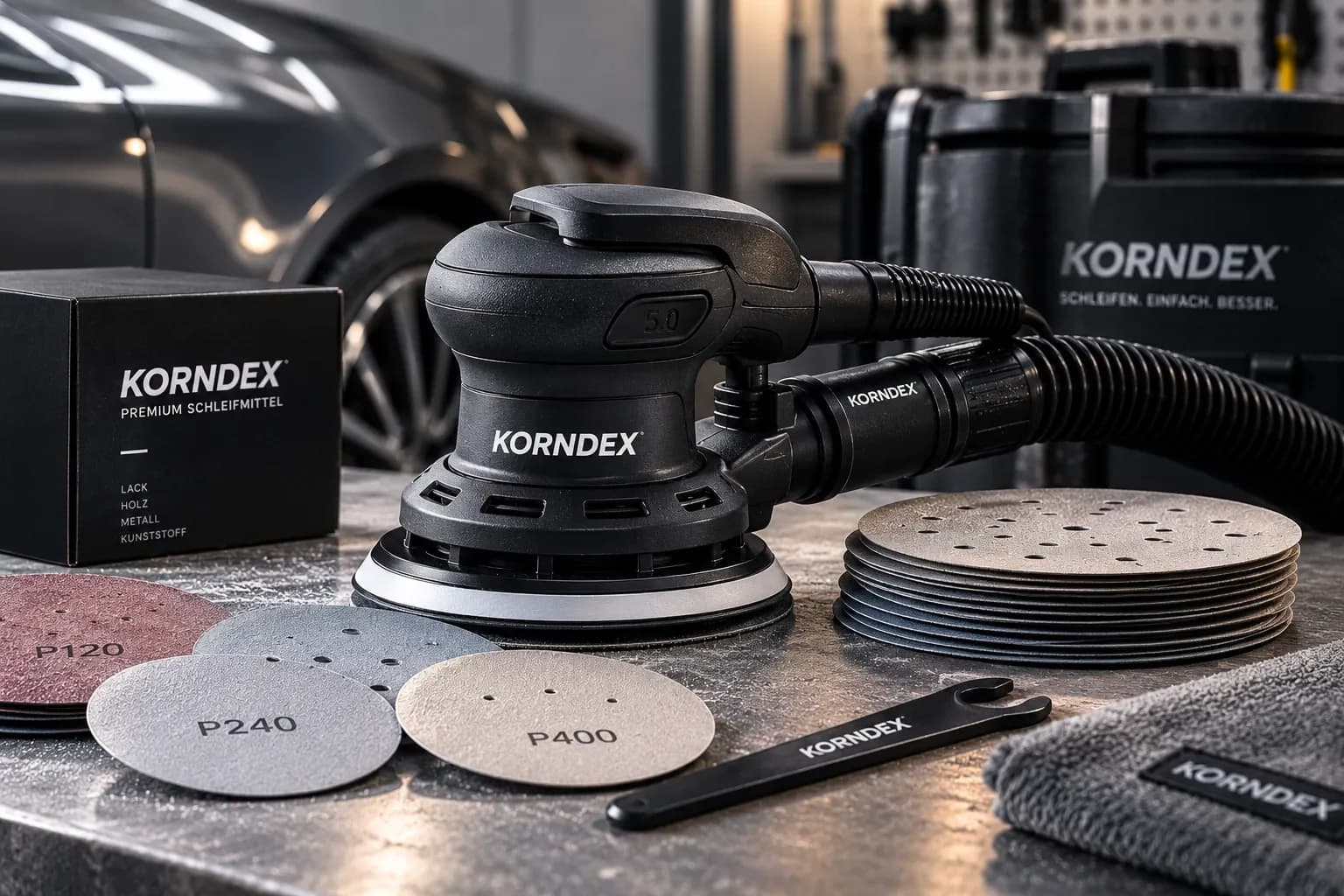
The backing pad rotates and at the same time oscillates on a small circular path. This produces no directional scratch pattern – which is why the random orbital is the machine for paint, body filler and fine wood surfaces. The orbit defines its character: around 2.5 to 3 mm for fine finishing, about 5 mm as an all-round machine, 7 mm and more for fast stock removal.
For most workshops and DIYers, a 150 mm random orbital sander with a 5 mm orbit and dust extraction is the first machine to get.
Orbital and detail sanders
The rectangular or triangular plate only oscillates. It removes less than a random orbital sander but gets into corners and along edges – window frames, inside furniture, mouldings. You sand with strips or triangles instead of round discs.
Belt sander and angle grinder
The belt sander is made for heavy stock removal on wood: old floorboards, warped panels, thick layers of paint. It is too aggressive for paint and fine surfaces.
The angle grinder, with a flap disc or non-woven abrasive, belongs on metal: dressing welds, removing rust and mill scale. It has no business on wood, body filler or paint.
And by hand
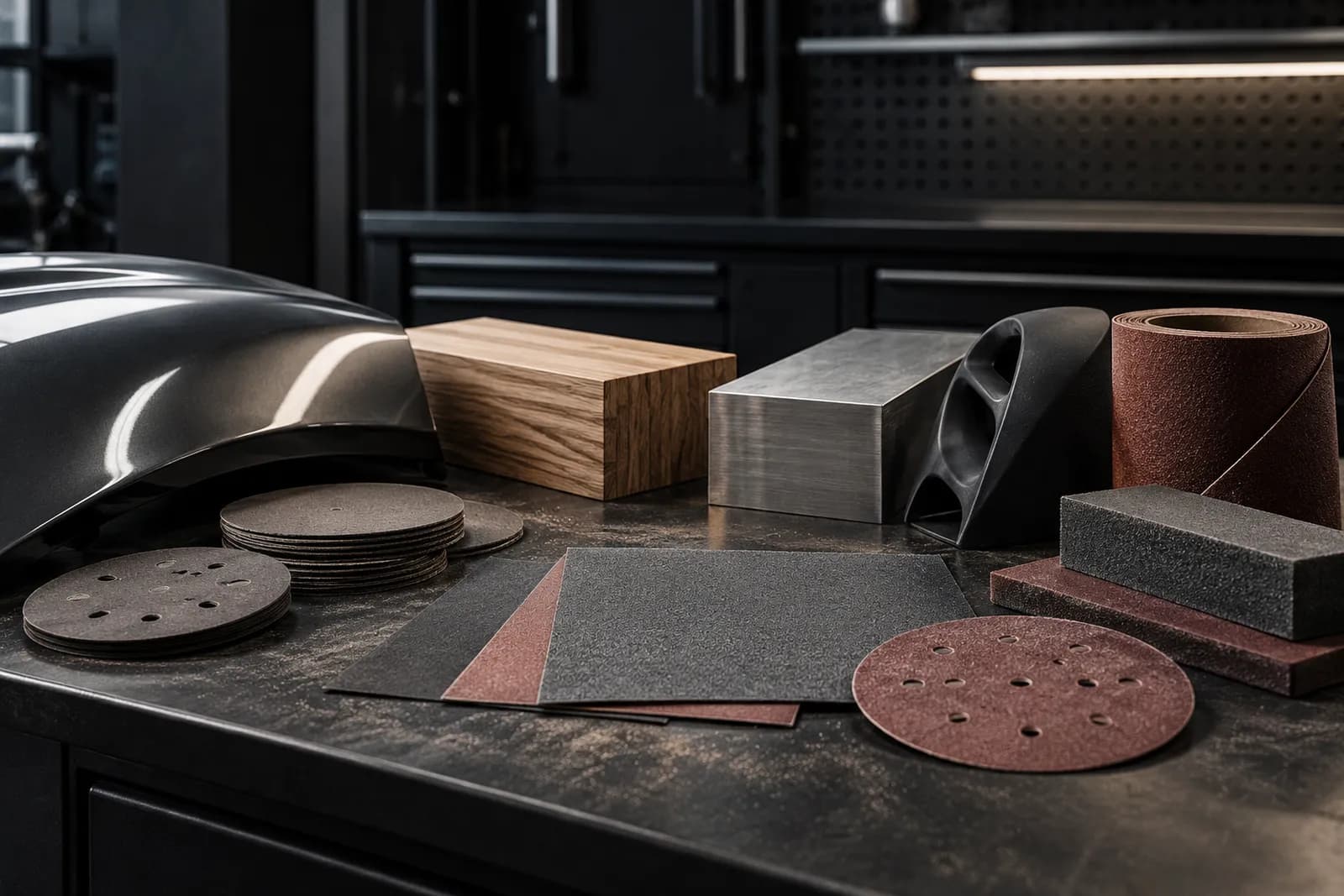
No machine replaces hand sanding on edges, curves and small spots – or for wet sanding clear coat. A hand block with a flat face keeps the surface level; foam pads and non-woven abrasive follow contours.
FAQ
Do I need more than one sander as a DIYer?
Usually not. A 150 mm random orbital sander with a 5 mm orbit covers wood, paint and body filler. Corners and mouldings you can do by hand with a block and sanding strips.