Sanders & technique · 1 min read
Random orbital sander: 3 mm or 5 mm orbit?
A large orbit removes material, a small orbit refines. Which suits which job – and why 5 mm is the all-rounder.
Last updated: · published

What the orbit means
The orbit is the diameter of the small circular path the backing pad moves along in addition to rotating. The larger the orbit, the more material each movement removes – and the coarser the scratch pattern. A small orbit means less removal and a finer pattern.
Which orbit for what
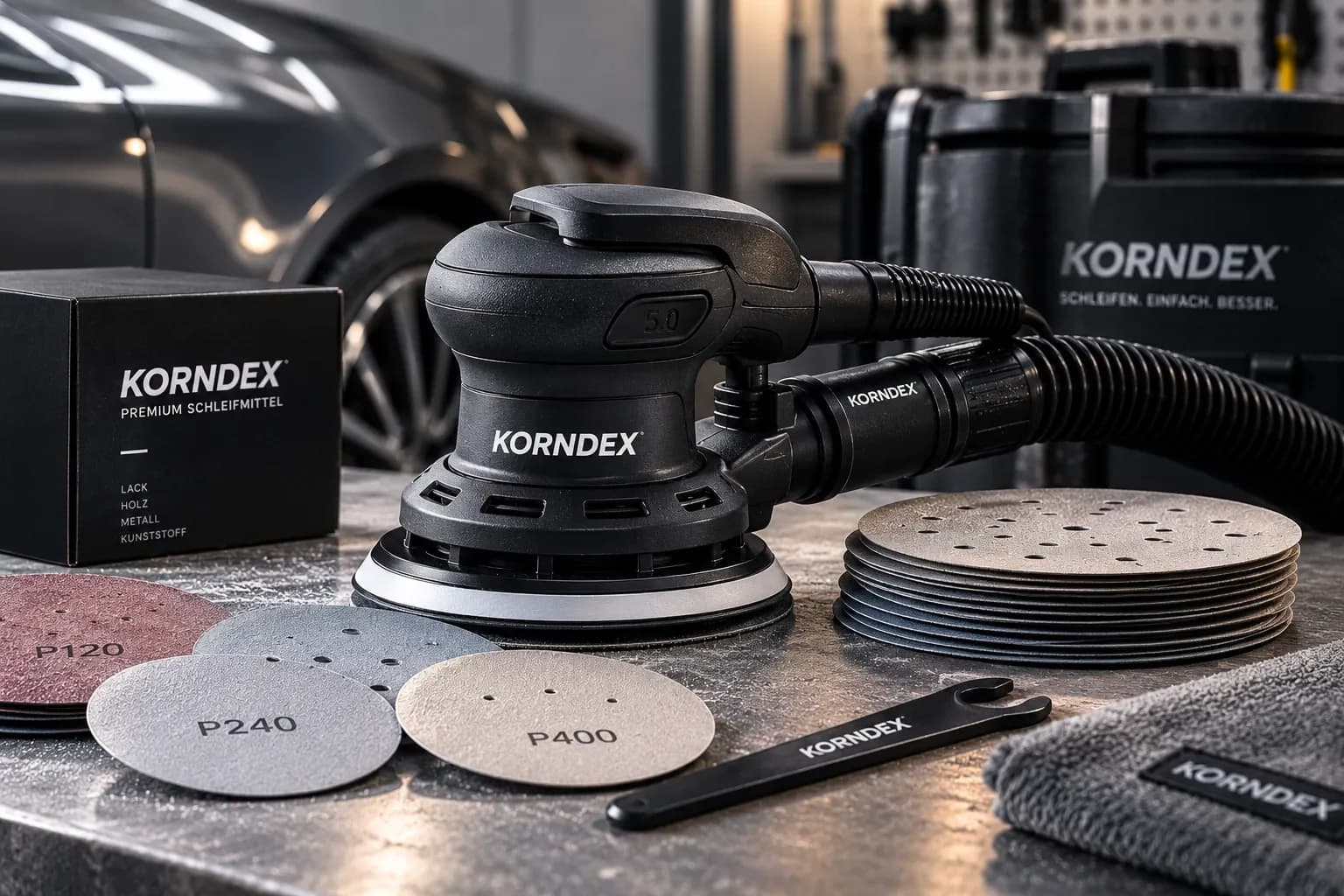
Around 5 mm is the all-rounder: enough removal for body filler and wood, fine enough for paint preparation up to P400 and beyond. Large orbits of around 8 to 9 mm pay off if you mostly do coarse work. Small orbits of around 2.5 to 3 mm are built for finishing – keying clear coat, removing paint defects, before polishing.
If you only have one machine, take 5 mm, turn the speed down for fine work and put a soft interface pad under the disc.
FAQ
Which orbit for wood?
For wood usually 5 mm – fast removal on large surfaces. 3 mm for fine sanding and paint.