Abrasives · 2 min read
Sandpaper P1500, P2000, P3000: what are fine grits for?
Fine grits hardly remove anything – they make scratches so fine that polishing takes them out. Where P1500 to P3000 belong and where they achieve nothing.
Last updated:
What “fine” means for sandpaper
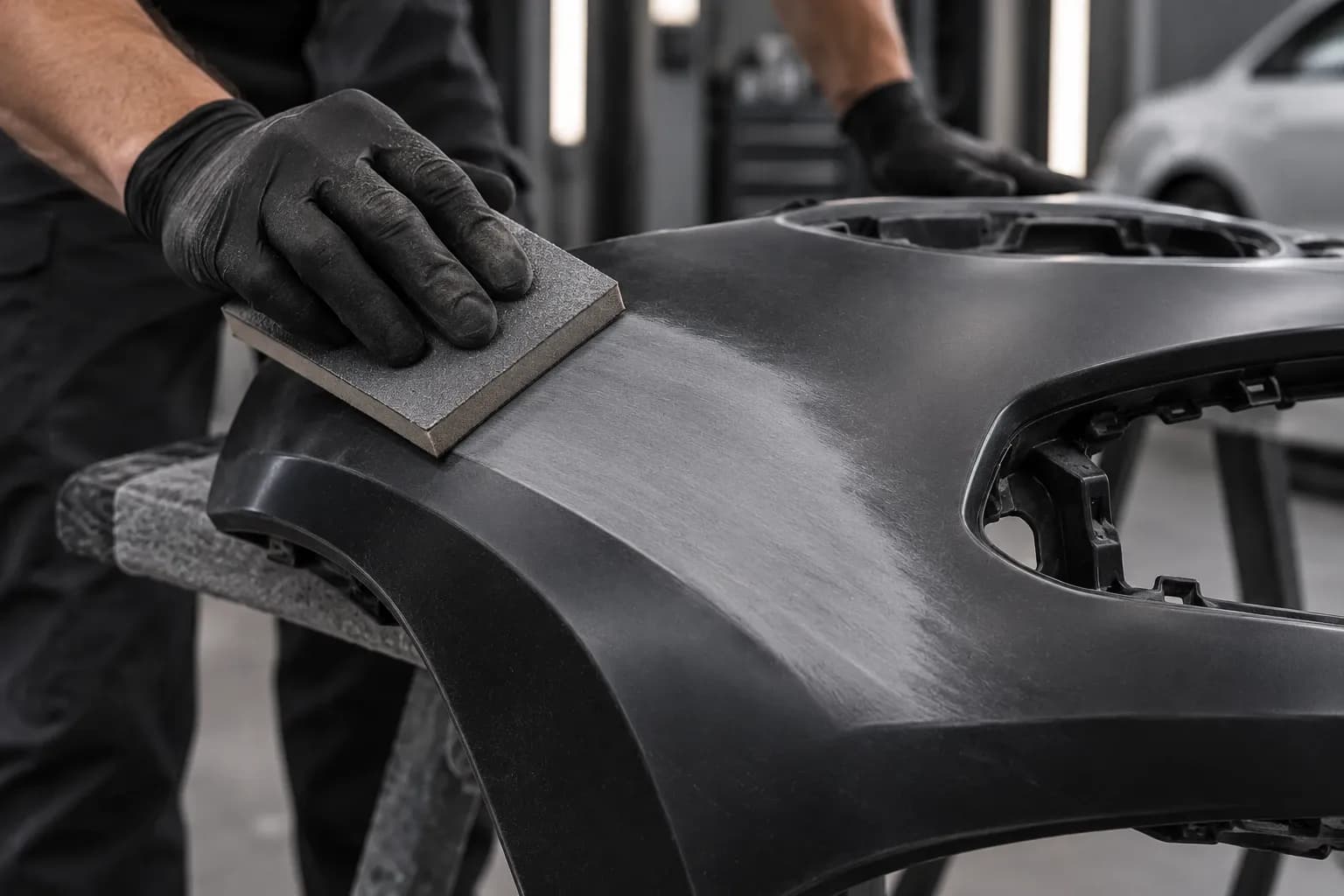
P220 to P400 counts as fine, P500 to P1000 as very fine, from P1200 as ultra-fine. P1500, P2000 and P3000 hardly remove anything: they don’t shape, but replace the scratches of the previous step with finer ones – until polishing takes them out.
That is why they come at the end of a sequence. Jumping straight from P400 to P2000 costs time, and individual deep scratches remain. Better to at most roughly double the grit per step: P400, P800, P1500, P2000.
Paint: defects and finish before polishing
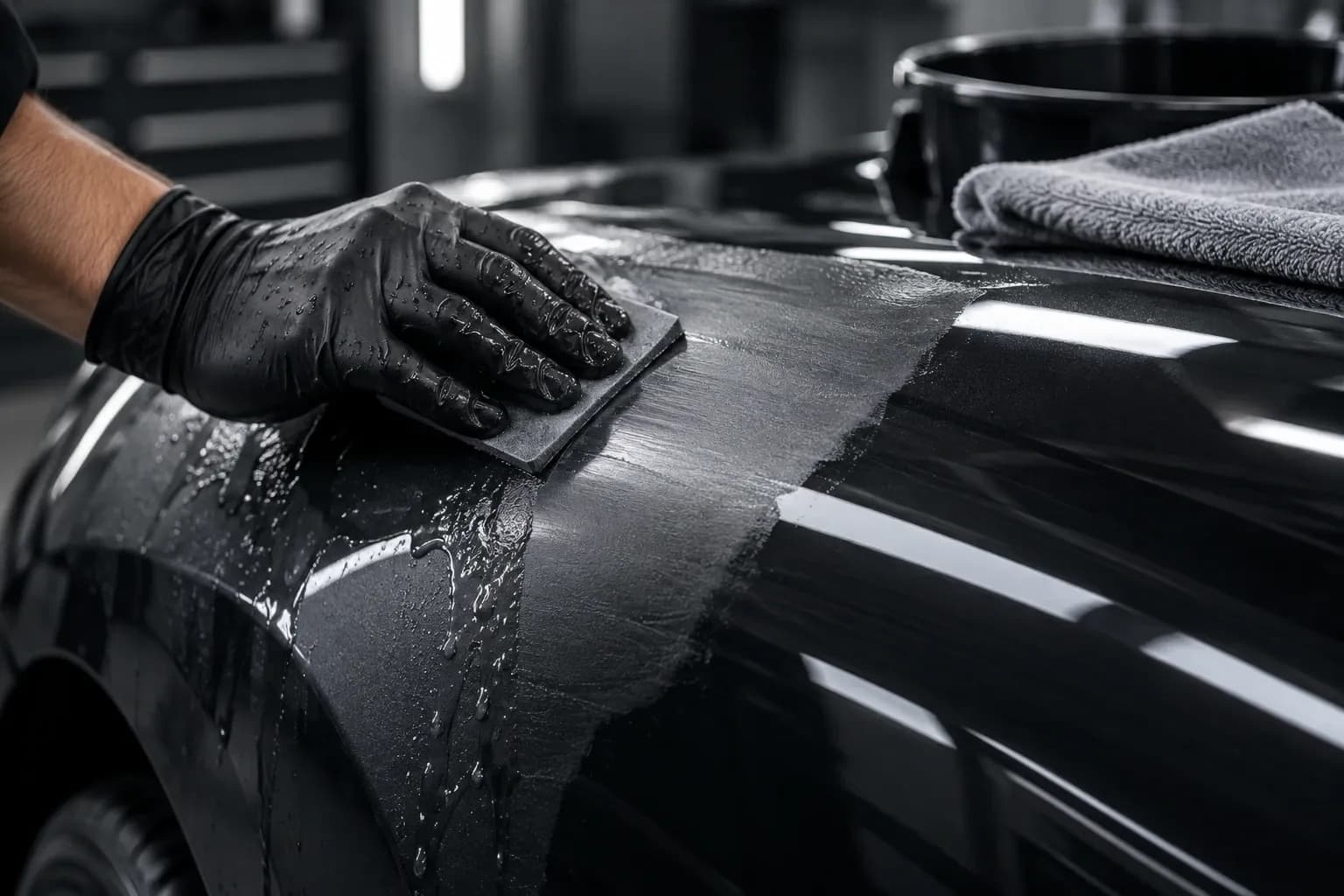
The main use is fully cured clear coat: take off dust nibs, runs and fine scratches locally with P1500, level with P2000, then polish – details in the articles on clear coat and on scratches in car paint. For keying before painting, these grits are too fine: old clear coat is matted with P800 to P1000 before recoating, not with P2000.
Headlights, acrylic, epoxy
You look through transparent plastics and resins, so every scratch scatters light. Yellowed headlights are wet sanded from P800 to P2000, then polished and sealed; acrylic edges go from P240 to P2000, epoxy resin wet from P800 to P2000 or P3000. Always with light pressure and plenty of water – plastic heats up quickly and smears.
Metal – and where fine grits achieve nothing
On brass, copper, aluminium or stainless steel, P1000 to P2000 prepare the surface for metal polish; for a brushed finish, stop after P400. On wood these grits achieve nothing – before oil and stain, P180 to P240 is enough. Filler and primer surfacer are never sanded this fine either, because the paint on top needs something to grip.
Wet sanding – and what about P3000?
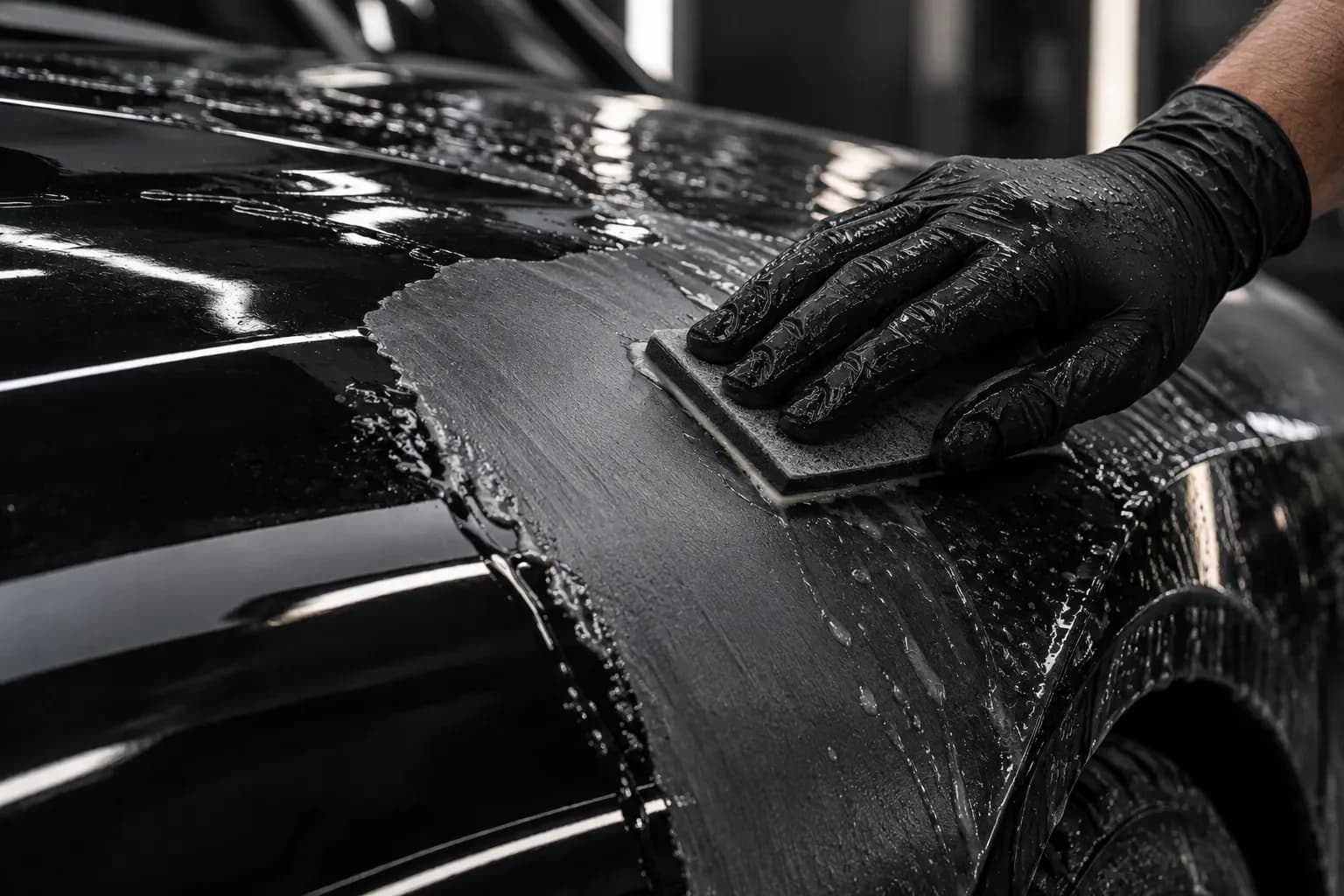
From about P800, water pays off: it rinses away the swarf so the fine grit doesn’t clog. By hand with a waterproof sheet on a block or with a foam pad; with a random orbital sander, dry with extraction – wet only with a machine the manufacturer approves for it.
Other manufacturers offer P2500 and P3000. They shorten polishing; you don’t need them if you start with a cutting compound after P2000. The finest grit at KORNDEX is P2000 – as the PRO SHEET wet sanding sheet and as the SOFT FINISH foam pad.
FAQ
Is 2000 grit sandpaper the same as P2000?
Only if there is a P in front. A number without a P often comes from a different standard (CAMI grit), and in the fine range the standards differ widely – P2000 corresponds to roughly 1000 grit.
Can I skip polishing after P2000?
No. After P2000, paint or plastic is evenly matt to satin; only polishing brings back the gloss. Skip polishing only if you are going to repaint – and for that, P2000 would be too fine.
Why is my fine sandpaper suddenly leaving scratches?
Usually it has clogged: swarf collects into small lumps that drag scratches. Use more water, rinse the sheet more often and wipe the surface in between. A grain left over from the previous step also causes scratches – clean thoroughly before every step.
Terms in this article
All terms in the sanding glossary →The whole sequence at once
4 grits, 1 × smallest pack each: PRO SHEET 230 × 280 wet (25 pcs) P800 · P1000 · P1500 · P2000.
Or as a set: Finish set for high gloss (P1000–P2000) for €59.90 →
incl. VAT, plus shipping