Plastic & resin · 1 min read
Sanding 3D printed parts: getting rid of layer lines
Layer lines on PLA, PETG and resin: coarse with P120 to P180, then up to P400 – and wet from P600 so the plastic doesn’t melt.
Last updated:
Coarse against the layers
Don’t let it get warm
PLA softens at around 60 degrees. Light pressure, short strokes, breaks. From P400, sand wet: the water cools and binds the dust. Always wet-sand resin prints and wear gloves while you do – uncured resin irritates the skin.
Prime or sand smooth
If you want to paint, spray on a filler primer after P240, sand it with P320 to P400 and paint. For a smooth surface without paint, carry on wet sanding up to P600 or P800.
FAQ
Can I sand PETG the same way as PLA?
Yes – PETG is a little tougher and smears more easily. Use light pressure, switch to wet sanding early and change the disc or sheet more often.
The whole sequence at once
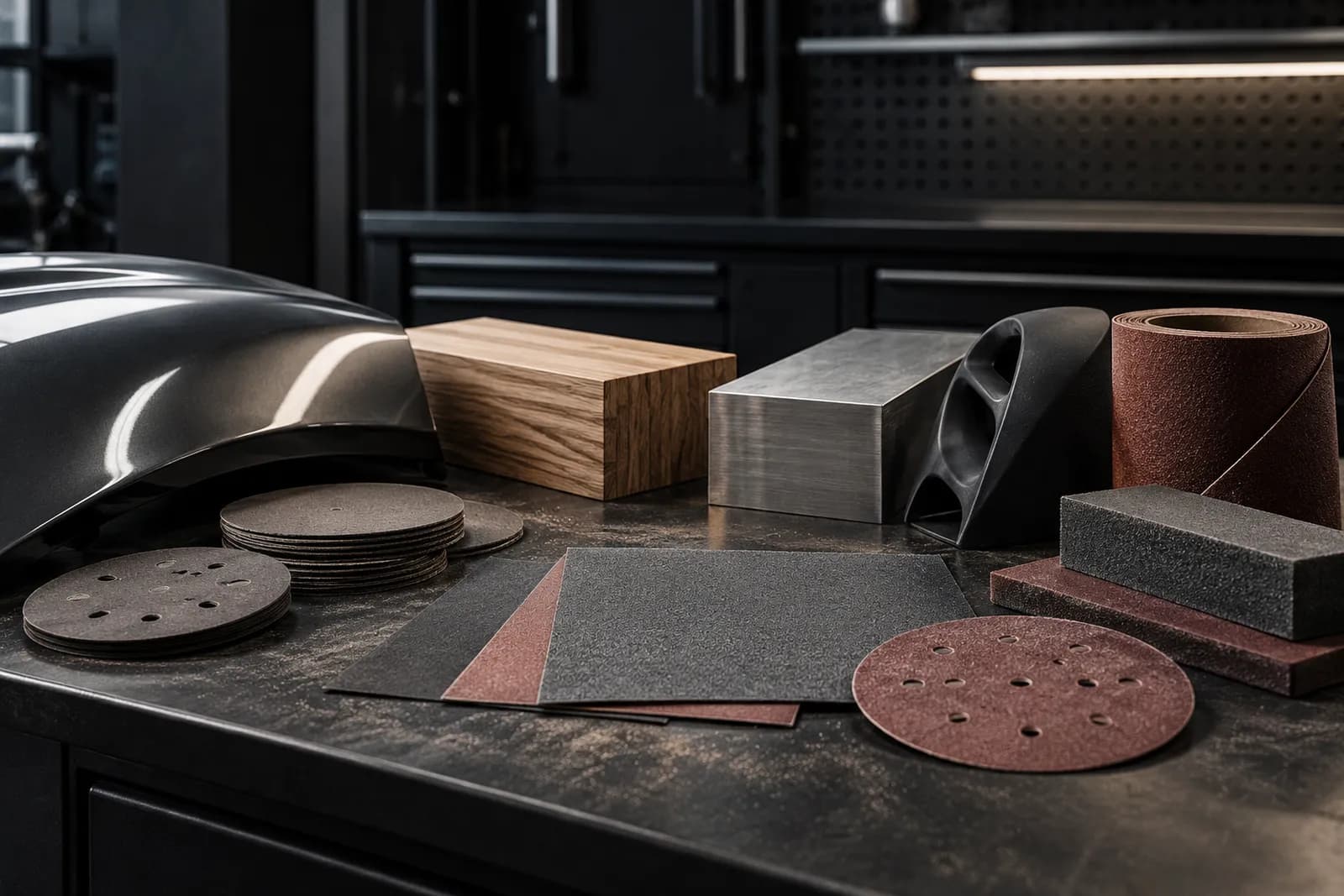
7 grits, 1 × smallest pack each: PRO STRIP 70 × 420 (25 pcs) P120 · P180 · P240 · P320, PRO SHEET 230 × 280 wet (25 pcs) P400 · P600 · P800.
Or as a set: Finish set for high gloss (P1000–P2000) for €59.90 →
incl. VAT, plus shipping