Metal · 1 min read
Keying before bonding: metal and plastic
Adhesive holds on a rough, clean surface: P80 to P120 on metal, P180 to P240 on plastic – and why you degrease before and after sanding.
Last updated:
Why key the surface
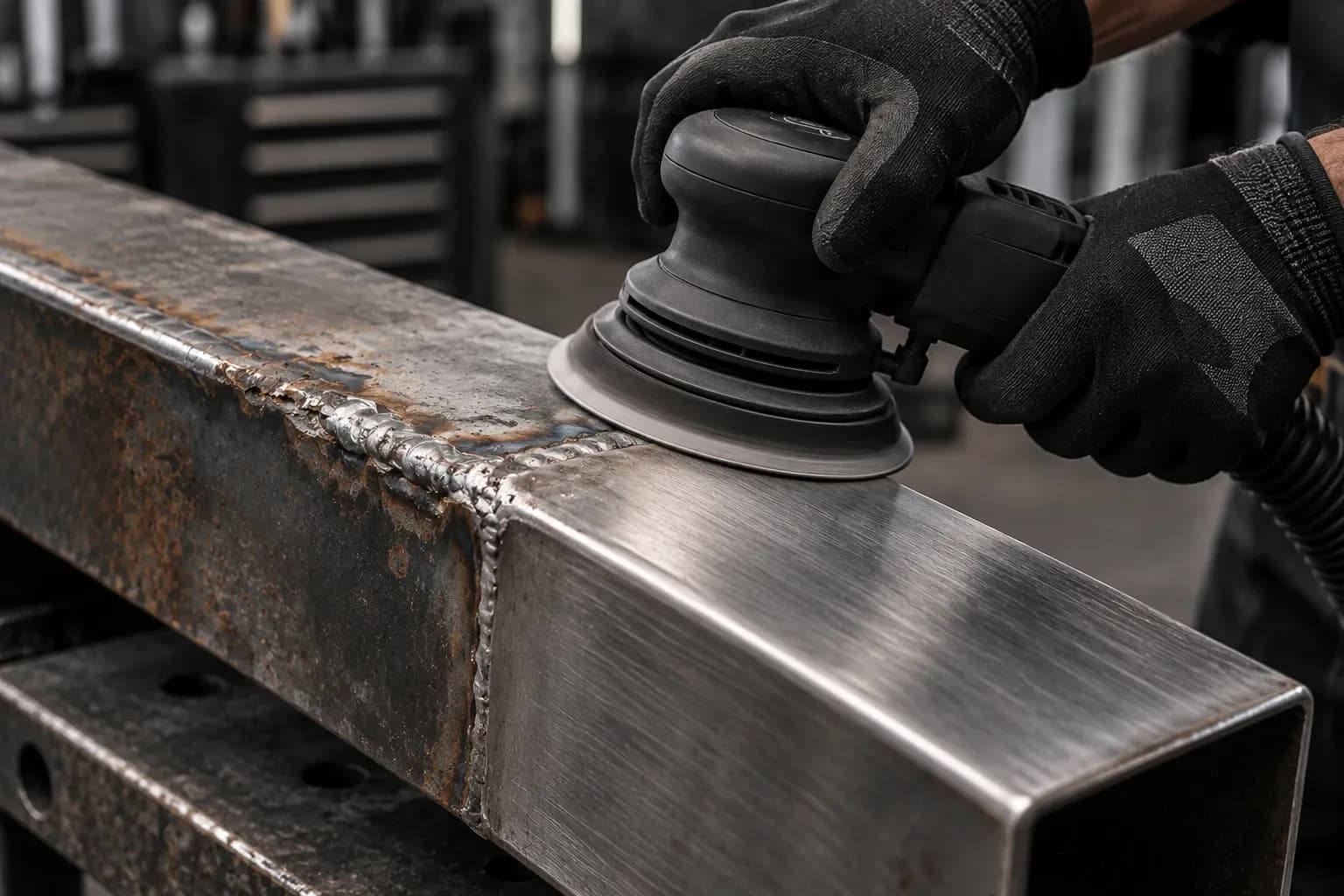
Adhesive holds best on a fresh, rough surface. Oxide layers, mill scale, grease and release agents get in the way and make the bond fail later. Sanding removes them and at the same time increases the surface area the adhesive can grip.
Metal
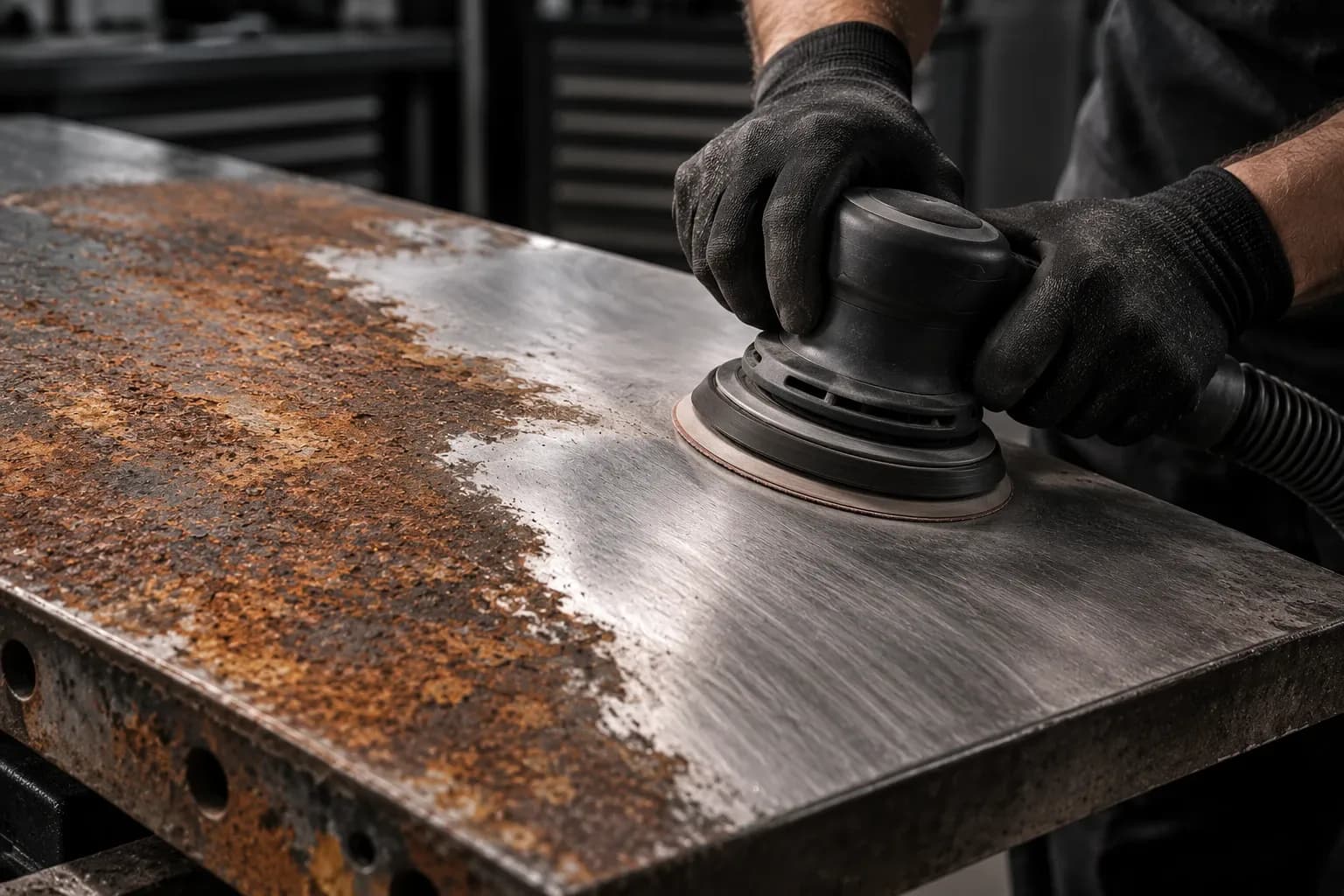
Degrease first – otherwise the abrasive just spreads the grease around. Then sand crosswise with P80 to P120 until the surface is bright and evenly rough all over. Blow or wipe off the dust and degrease again. Don’t touch the surface with your fingers after that.
Aluminium quickly forms a new oxide layer: bond it within an hour if possible. With steel, a few hours are fine as long as the surface stays dry.
Plastic
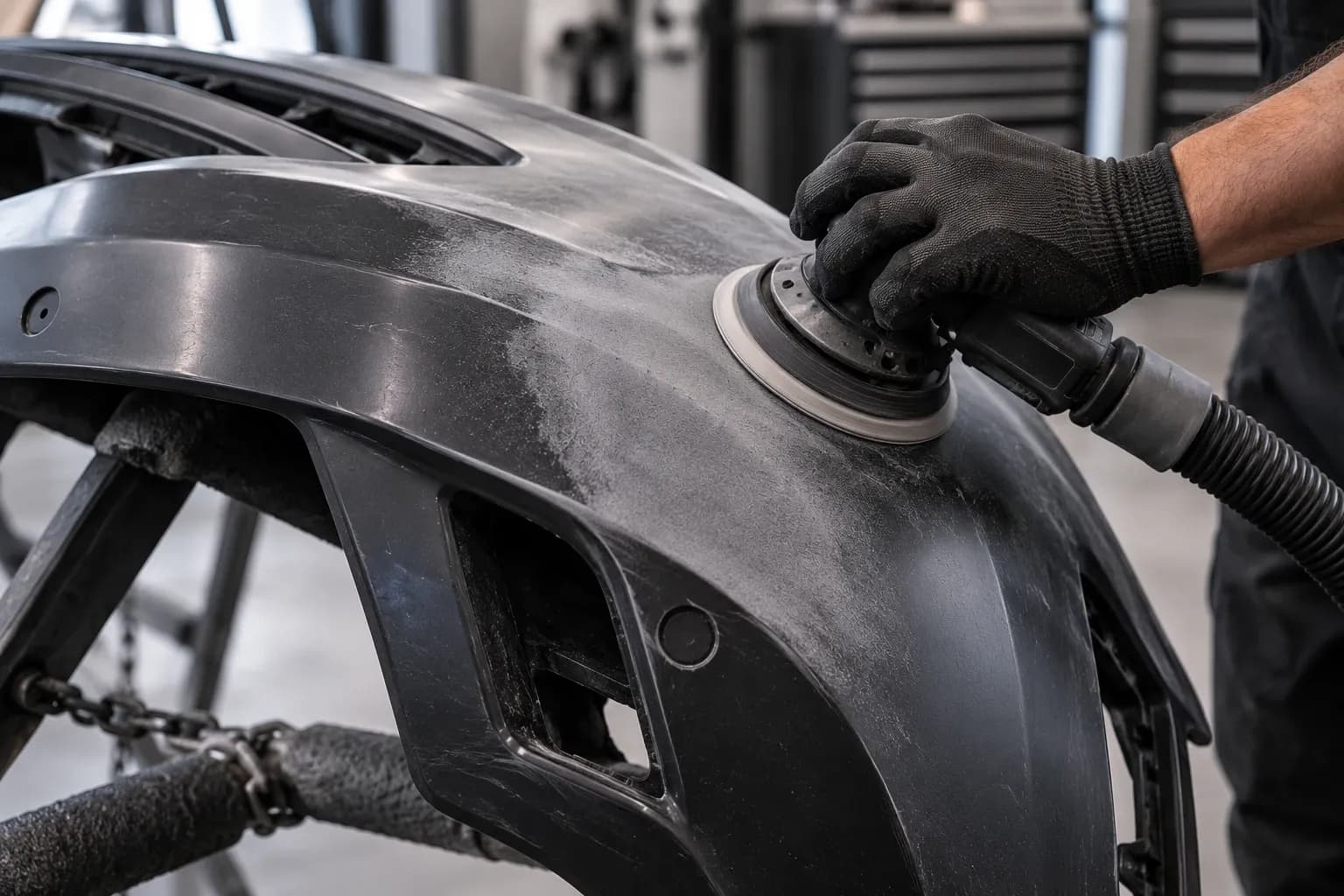
Rough up plastic with P180 to P240 or non-woven abrasive, without deep scratches – the plastic should go matt, not scratched. Wipe it before and after with a cleaner suitable for plastics.
Polyethylene (PE) and polypropylene (PP) are hard to bond even after keying; they need a primer or a special adhesive. The material code is usually moulded on the inside of the part.
FAQ
Can I use non-woven abrasive instead of sandpaper?
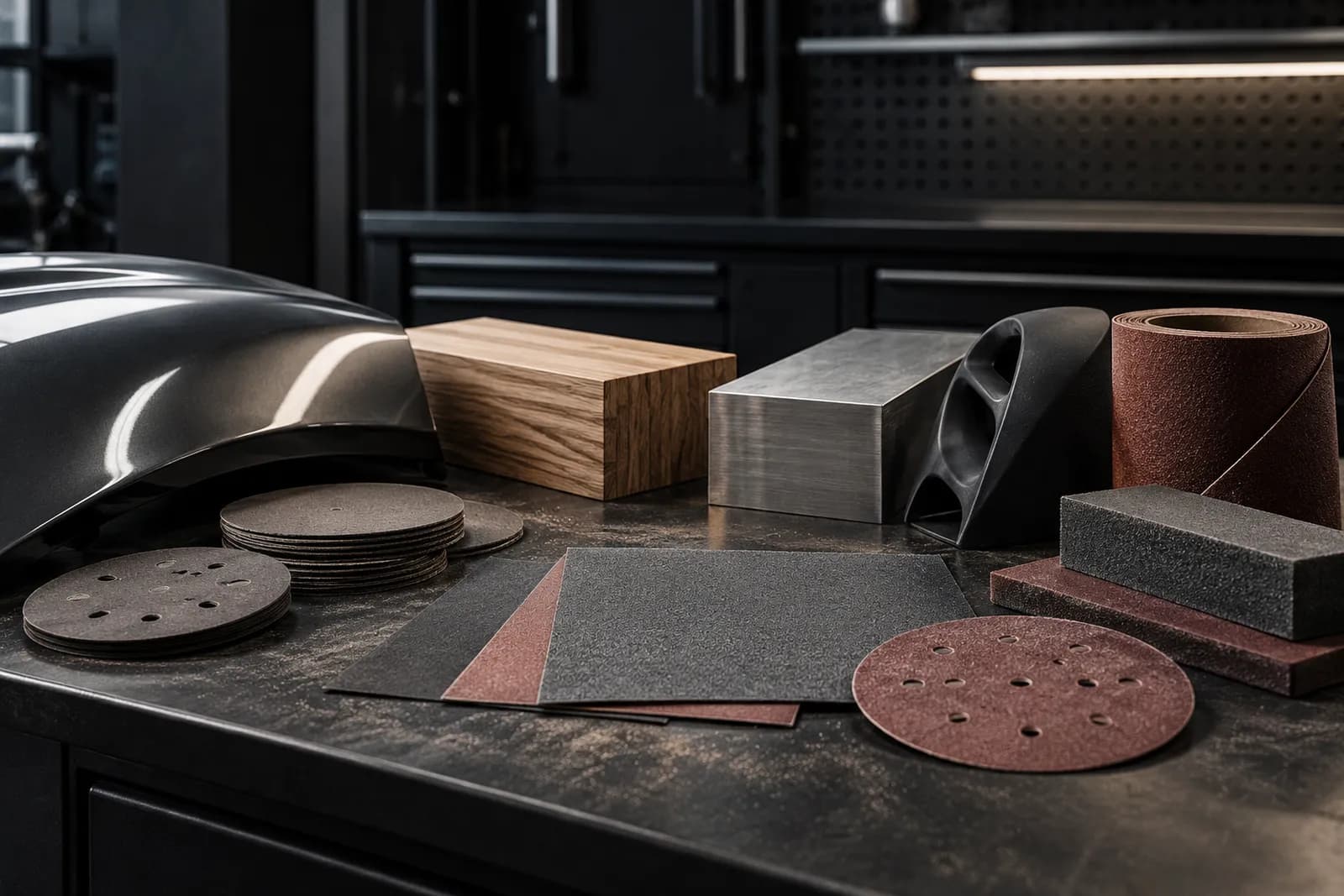
On plastic and thin sheet metal, often yes – it roughens evenly without deep scratches. For rust, mill scale and scale on steel, sandpaper with P80 to P120 is faster and more thorough.
Terms in this article
All terms in the sanding glossary →The whole sequence at once
4 grits, 1 × smallest pack each: PRO CUT 150 (10 pcs) P80 · P120 · P180 · P240.
incl. VAT, plus shipping