Abrasives · 1 min read
Abrasive fleece or sandpaper?
Fleece mattifies, paper removes. Where fleece does the better job – corners, edges, mouldings, keying before paint – and where it falls short.
Last updated:
What fleece can do
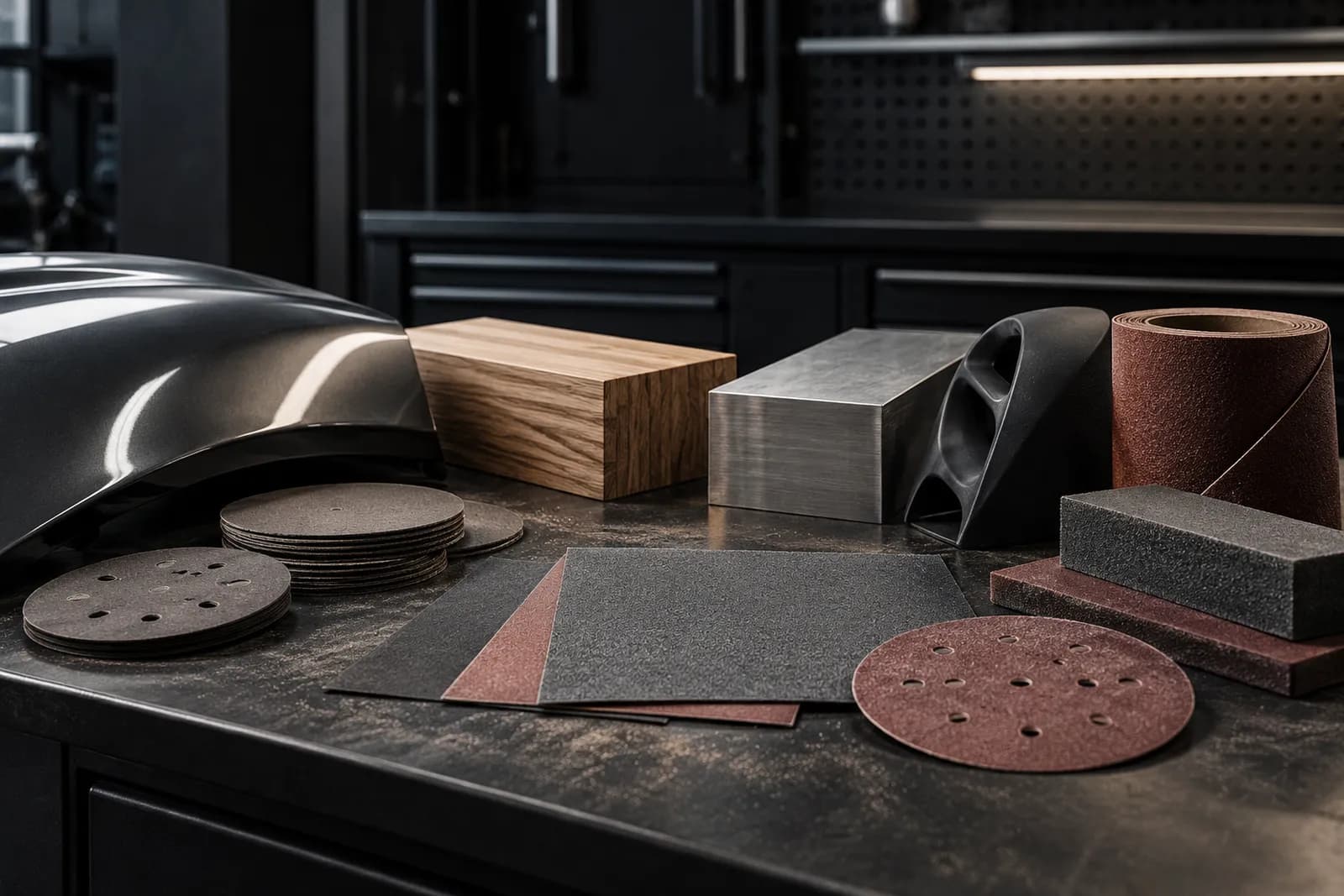
Abrasive fleece (non-woven abrasive) is a synthetic web with abrasive grain embedded in it. It adapts to any shape and sands evenly without deep scratches. Ideal for keying paint in swage lines, corners and on edges, where paper would sand through, and for matting metal.
Fleece hardly clogs and can be rinsed out – wet or dry.
Where paper wins
Stock removal, body filler, levelling: for that you need an abrasive on a firm backing plus a block or backing pad. Fleece follows every unevenness instead of sanding it away.
Fleece and grit
FAQ
Can I use abrasive fleece on a random orbital sander?
There are hook-and-loop fleece discs for random orbital sanders. Fleece sheets, though, are used by hand or on a block – that is where they play to their strengths on edges and in swage lines.
Which fleece colour means which fineness?
It is not standardised and varies from one manufacturer to the next. So go by the fineness stated on the pack, not by colour alone.