Wood · 1 min read
Pine, spruce, larch: sanding softwood
Soft earlywood, hard growth rings, resin: why softwood ends up wavy, how to keep it flat and why P180 is enough before stain and oil.
Last updated:
Soft and hard in the same board
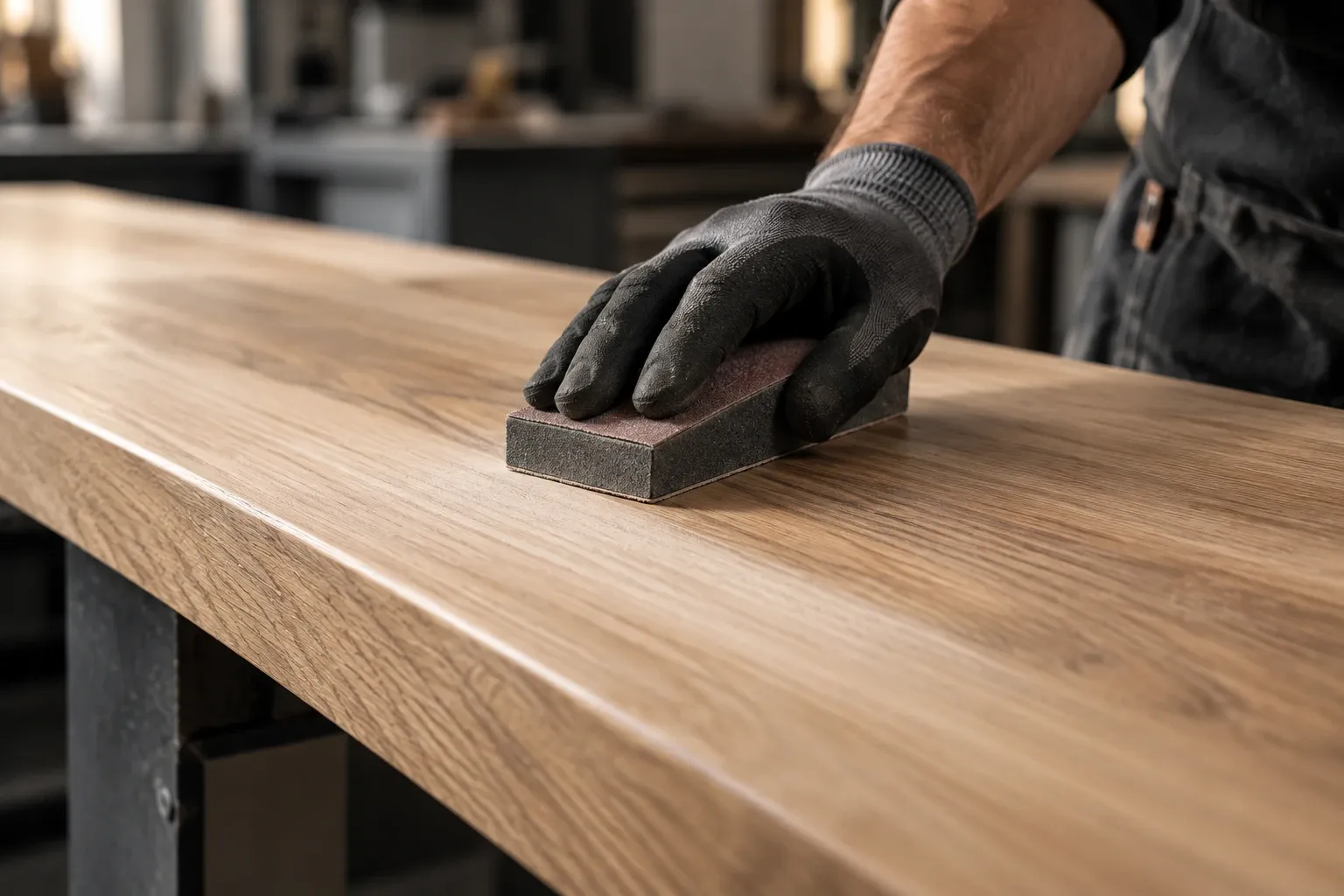
In softwood, soft pale zones (earlywood) alternate with hard dark growth rings. The soft wood wears away faster – with a soft pad and lots of pressure you get a wavy surface where the hard rings stand proud. So sand with a hard backing pad or on a hand block, with light pressure and without lingering in one spot.
Knots are much harder than the wood around them. Don’t keep sanding on them until they’re flat – that creates a hollow all around them.
Resin clogs the abrasive
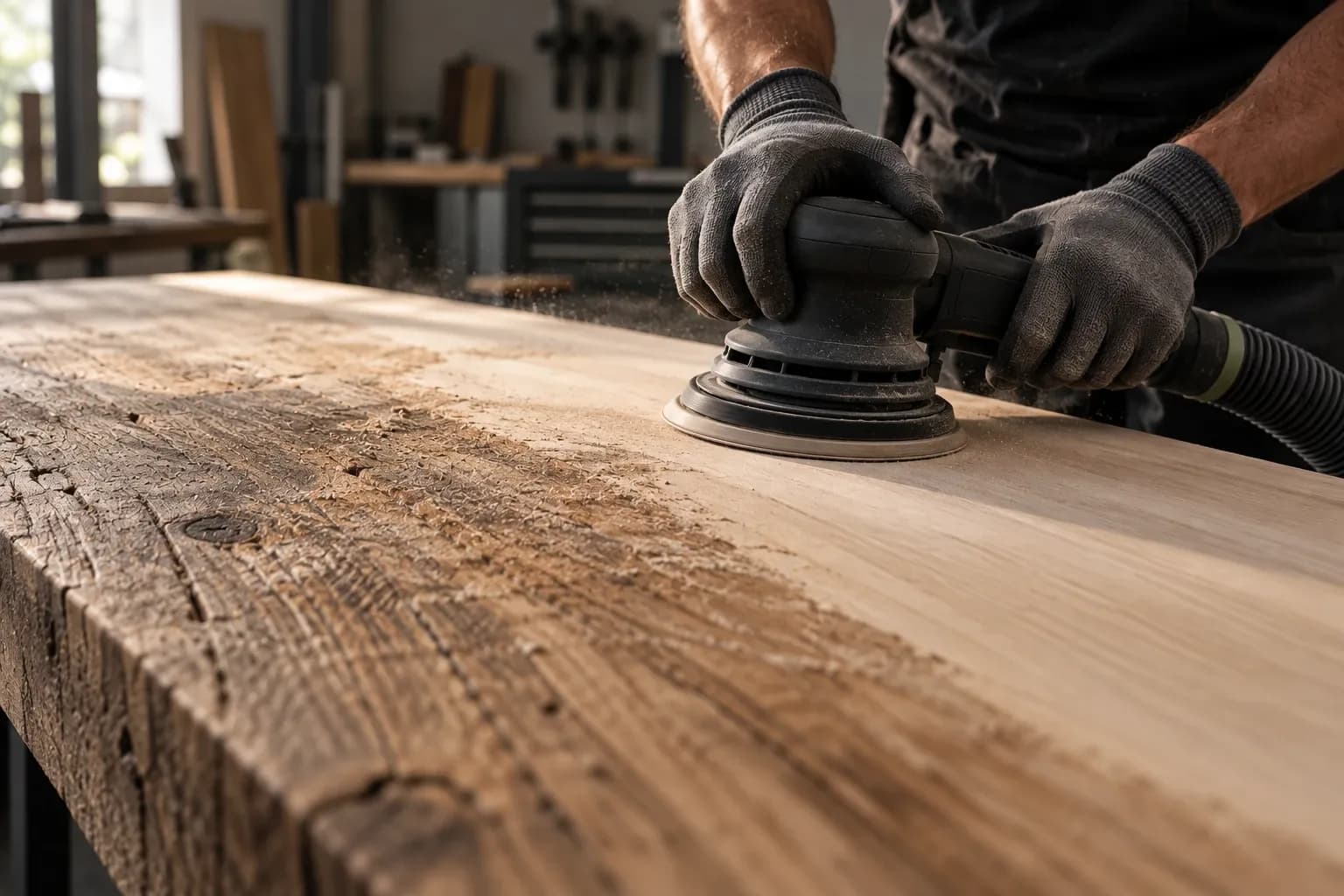
Pine and larch contain a lot of resin, which heats up during sanding and gums up the abrasive. Abrasive mesh or open-coat paper clogs more slowly. Wash out resin pockets and bleeding resin beforehand with resin remover or thinners and let it dry.
Not too fine
FAQ
Why does pine go blotchy after staining?
The soft earlywood soaks up more stain than the hard growth rings. A primer or pre-coat evens this out; sanding too fine tends to make it worse.
The whole sequence at once
3 grits, 1 × smallest pack each: PRO NET 150 (10 pcs) P80 · P120 · P180.
Or as a set: Wood starter set (P80–P240) for €49.90 →
incl. VAT, plus shipping