Wood · 1 min read
Sanding and oiling wooden garden furniture
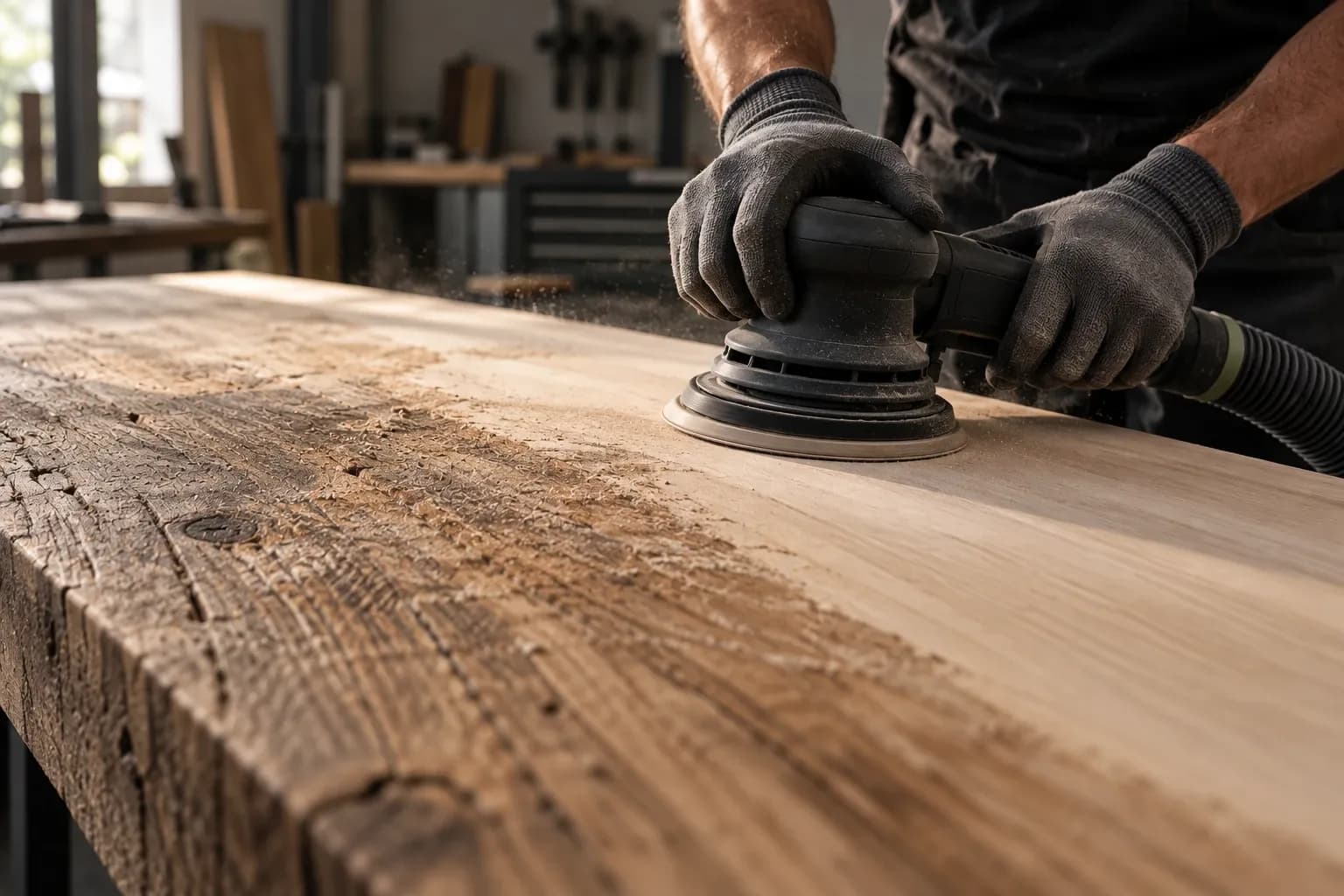
Teak, eucalyptus, larch: the grey only sits on the surface. Take it off with P80 to P120, smooth with P180, then oil – and don’t go finer, or the oil won’t soak in properly.
Last updated:
Sanding off the grey
Slats, edges, gaps
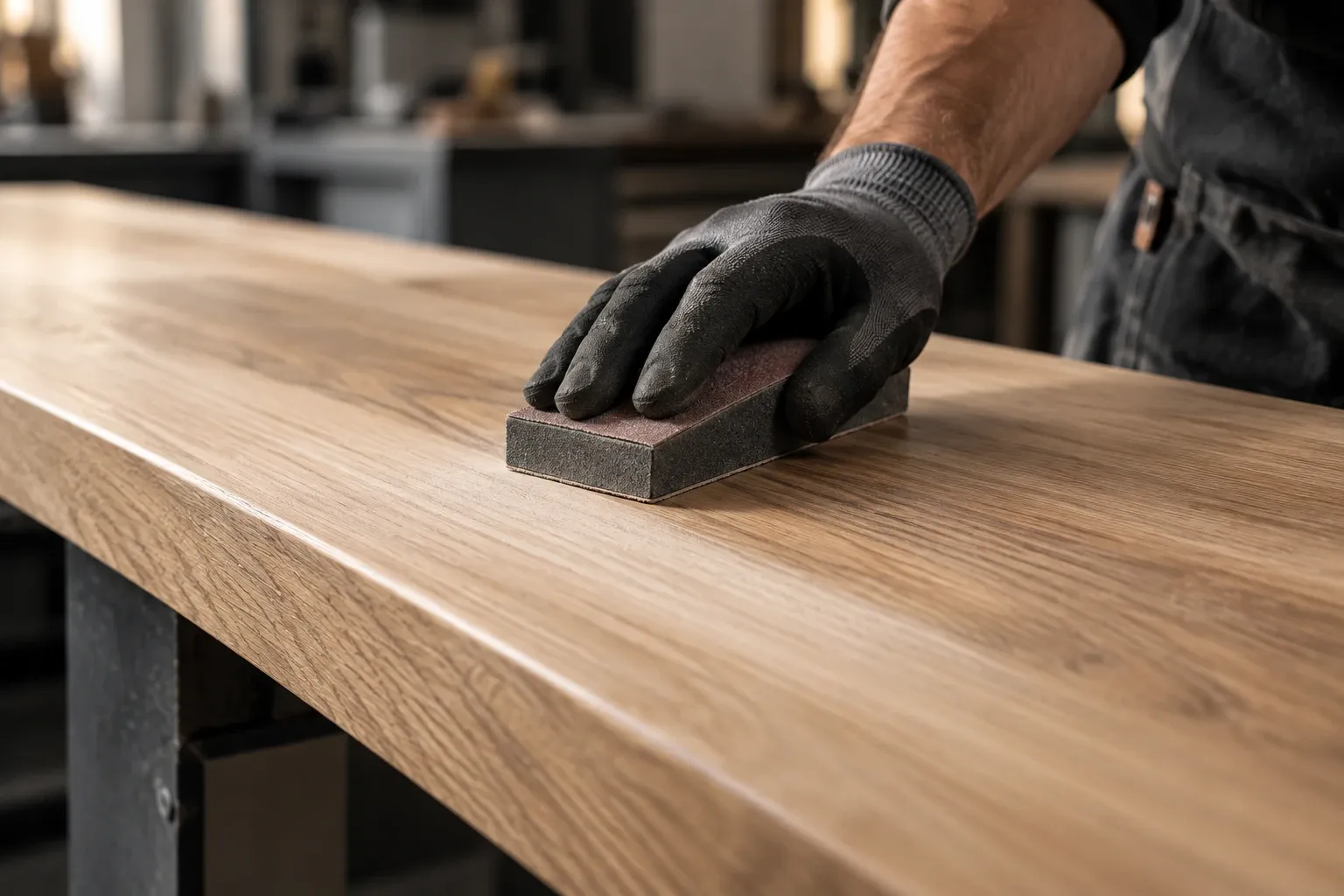
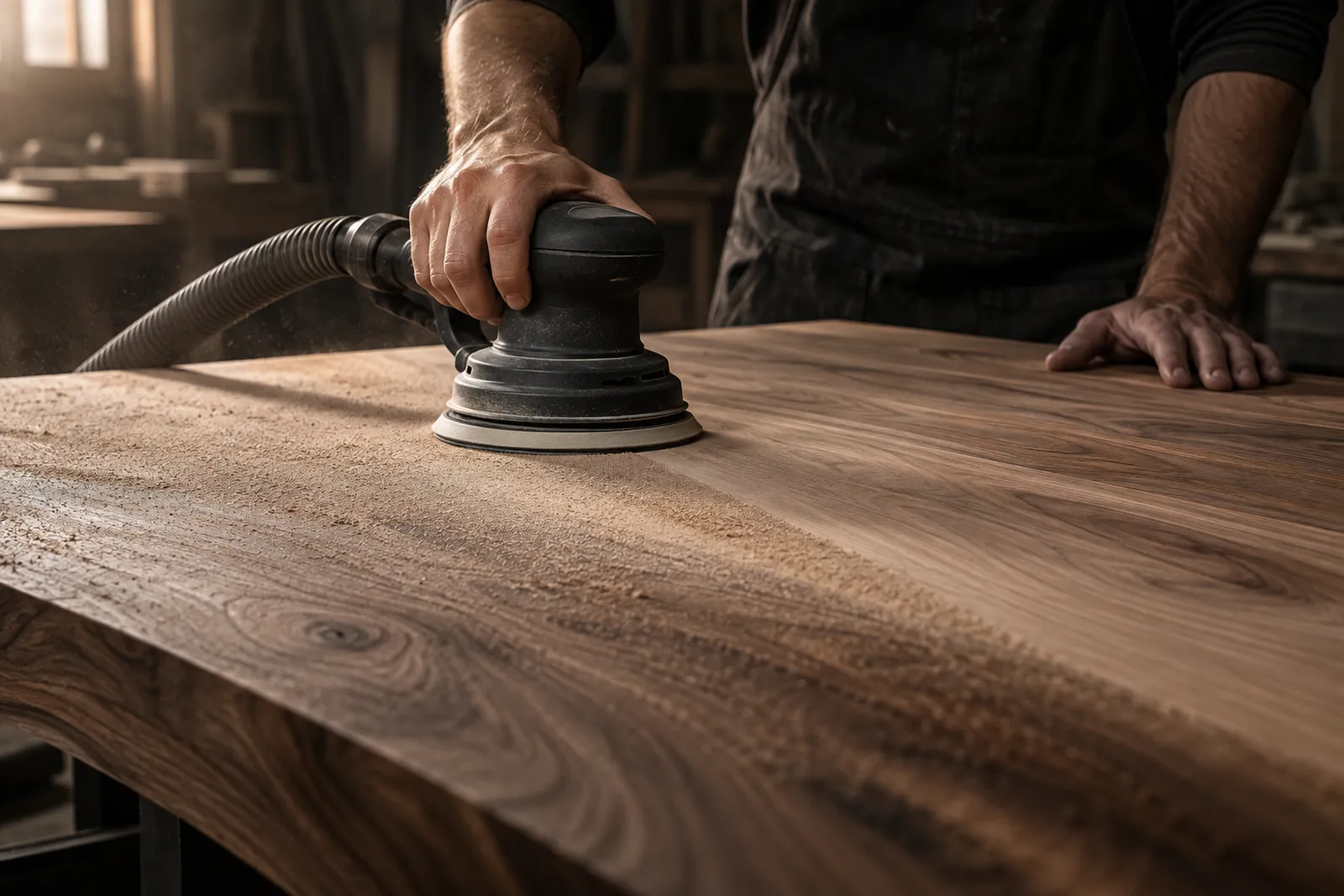
The flat surfaces are a job for the random orbital sander – always finish along the grain. Between the slats and on armrests, sand by hand with strips or non-woven abrasive. Break the edges slightly – sharp edges take oil badly and splinter.
Oiling – not too fine
For oil, stop at P180: wood sanded finer absorbs less oil. Brush off the dust thoroughly, oil thinly and wipe off the excess after the soak-in time. A second coat the next day lasts longer.
Preparation: fittings and resin
Remove or mask screws, fittings and hinges – sandpaper scratches metal, and oil on fittings attracts dirt.
Larch, Douglas fir and pine bleed resin. Resin clogs paper quickly; abrasive mesh, a lower speed and changing more often all help. Wash out resin pockets with methylated spirit beforehand.
How often to sand?
A full sand is only needed when the wood is grey or rough again – usually every few years. In between, it’s enough to clean in spring, rough up lightly with fine non-woven abrasive and re-oil. That leaves more wood on the furniture.
FAQ
How often does garden furniture need oiling?
Usually once a year, before the season. If the wood turns grey again or water no longer beads off, key lightly with P180 or non-woven abrasive and re-oil – a full sand-down isn’t needed then.
Terms in this article
All terms in the sanding glossary →The whole sequence at once
3 grits, 1 × smallest pack each: PRO CUT 150 (10 pcs) P80 · P120 · P180.
Or as a set: Wood starter set (P80–P240) for €49.90 →
incl. VAT, plus shipping