Abrasives · 1 min read
Aluminium oxide, silicon carbide, ceramic: which abrasive grain for what?
Aluminium oxide for almost everything, silicon carbide for fine wet sanding, ceramic and zirconia for heavy stock removal on steel – and what an open coat means.
Last updated:
Aluminium oxide (corundum): the all-rounder
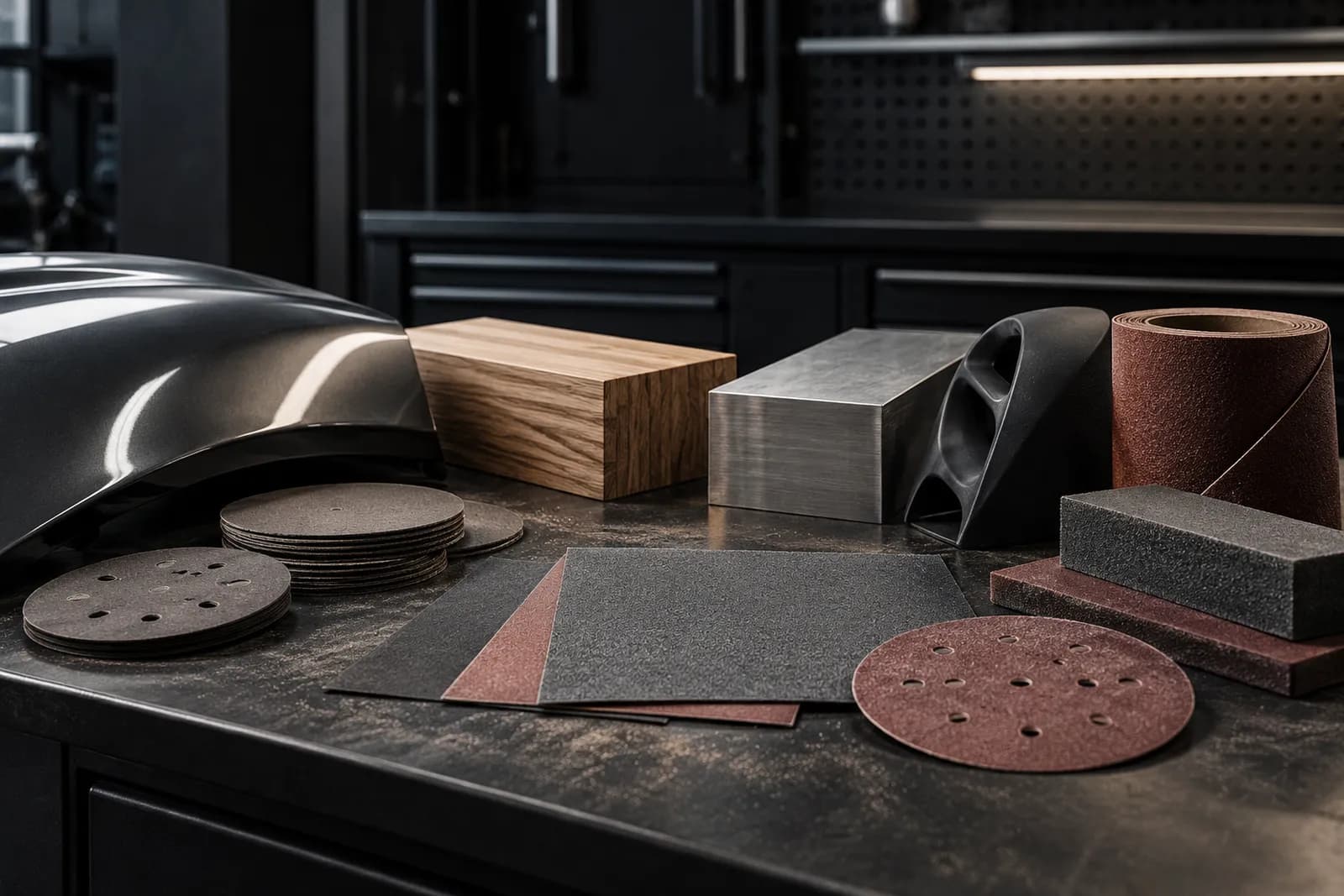
Most sandpaper is coated with aluminium oxide, also known as corundum. The grain is tough, fractures little and lasts a long time – on wood, filler, primer surfacer, paint and metal. All KORNDEX discs for random orbital sanders use it, from coarse sanding to the film disc.
Silicon carbide: sharp and fine
Silicon carbide is harder and sharper, but more brittle: the grain fractures and keeps forming new cutting edges as it does. That gives a very even, fine scratch pattern – ideal for wet sanding clear coat, plastic, acrylic and stone. That’s why the wet sanding sheet (PRO SHEET) is coated with silicon carbide.
On steel it wears faster than aluminium oxide; for heavy stock removal on metal it isn’t the first choice.
Ceramic and zirconia: for heavy stock removal
Ceramic grain and zirconia alumina are built for high pressure on metal: weld seams, stainless steel, castings – mostly on flap discs, fibre discs and sanding belts. Ceramic resharpens itself under pressure and stays aggressive for a long time. On paint, wood or filler it brings no advantage, just a higher price.
Coating density and stearate
Open coat means fewer grains and more space between them. The paper clogs more slowly on wood, paint and filler. Closed coat cuts more aggressively and suits metal better. A stearate coating (often whitish) also stops paint and filler dust from caking in the grit.
FAQ
Is more expensive grain always better?
No. Ceramic grain only plays to its strengths under high pressure on metal. On paint, wood or filler, a good aluminium oxide sands just as cleanly and lasts, provided the dust extraction is right.
How can I tell which grain it is?
It’s usually printed on the back or the packaging (A or AO for aluminium oxide, C or SiC for silicon carbide). Silicon carbide is often dark grey to black, aluminium oxide brown, red or white – but colour alone isn’t a reliable sign.